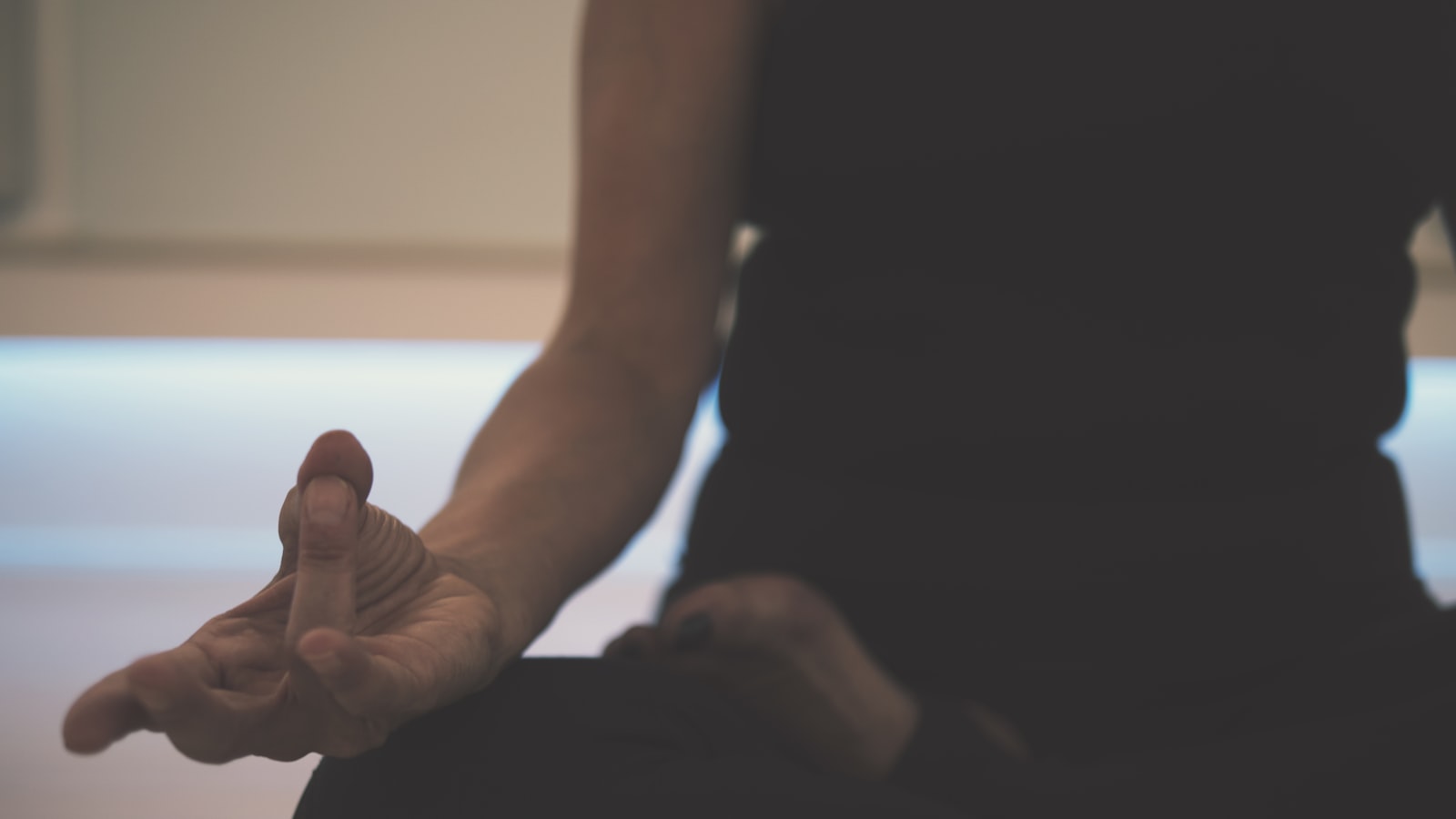
A busy day has a way of convincing you there's no room for calm. There's always one more task, one more message, one more thing that should have been done an hour ago. But calm isn't something you have to schedule for later. It's something you can fold into the day you're already living, in pieces small enough to actually use.
Stop waiting for the perfect break#
Many of us save rest for some imagined future moment when everything is finished. The trouble is that the to-do list rarely ends, so the calm we keep promising ourselves never quite arrives. By evening we're depleted, having pushed straight through without a single real pause.
A more reliable approach is to lower the bar for what counts as a break. A break doesn't have to be a long walk or a quiet hour. It can be thirty seconds of standing still, looking out a window, before you start the next thing. When you stop reserving calm for big chunks of free time, you discover the day is full of small openings you'd been rushing past.
These micro-breaks add up. Several short resets scattered through a busy day often leave you steadier than one long break you finally collapse into at the end. The goal isn't to escape the day. It's to keep returning to a calmer baseline so the busyness never fully takes you over.
Use your breath as an anchor#
When the day picks up speed, your breathing usually follows, becoming shallow and quick. That faster breath signals to your body that something's wrong, which ramps up the very tension you're trying to ease. The good news is that this works in reverse too: slow your breath, and your body gets the message that it's safe to settle.
You don't need a quiet room or a special technique. Try breathing in for a slow count of four, then out for a count of six. The longer exhale gently nudges your nervous system toward calm. Three or four rounds is often enough to take the sharpest edge off a stressful moment, and no one around you will even notice you're doing it.
Your breath is always with you, always free, and always in the present. When the day pulls your mind in ten directions, one slow exhale can quietly bring you back.
The beauty of breath is its portability. You can use it in a meeting, in traffic, in a queue, or in the two minutes before a difficult conversation. It asks nothing of your schedule. It's the simplest reset you own, and the more you practice it on ordinary days, the more naturally it shows up on hard ones.
Make small shifts in attention#
A busy mind tends to live in the next task while the body does the current one. You wash a dish while rehearsing an email, then write the email while worrying about a meeting. This constant leaning-forward is exhausting, and it's also where a lot of everyday stress hides.
You can interrupt it with a small shift in attention. For a few seconds, bring your focus to whatever you're actually doing. Feel the warm water on your hands. Notice the texture of the keyboard. Hear the background sounds of the room. You're not trying to clear your mind or reach some special state. You're simply choosing to be present for one ordinary task instead of mentally living in the next one.
Done now and then through the day, these little returns to the present have a steadying effect. They remind you that you only ever have to handle this moment, not the entire avalanche of the day at once. The work still gets done, but it stops feeling like you're being chased through it.
Protect a few edges of your day#
The transitions in a day, the edges between one thing and the next, are where stress tends to pile up. We tumble straight from sleep into our phones, from the commute into the inbox, from work into the demands of home, never quite landing anywhere. Protecting even one of these edges can change the texture of the whole day.
Pick a single transition and give it a small ritual. Maybe you drink your morning coffee without your phone for five minutes. Maybe you sit in the parked car for a moment before walking into the house, letting work fall away. Maybe you take three slow breaths before opening your laptop. These small boundaries don't shrink your responsibilities, but they keep the busyness from bleeding into every corner of your life.
You don't need to protect every edge. Even one calmer transition gives your nervous system a place to catch its breath, and that steadiness tends to ripple outward into the hours that follow.
Be kind about the hard days#
Some days will resist every effort to slow down, and that's worth accepting rather than fighting. On those days, calm might mean nothing more than one slow exhale between fires. That still counts. Calm isn't an all-or-nothing achievement; it's a direction you keep leaning toward, however imperfectly.
If you notice that busyness has hardened into a constant, gnawing stress, that rest never seems to help, or that you feel anxious even when there's nothing pressing to do, it's wise to check in with a doctor or a mental health professional. Ongoing overwhelm is something you can get real support with, and asking for it is a sign of good sense, not weakness.
Finding calm in a busy day isn't about clearing your schedule or finally getting on top of everything. It's about meeting the day you have with a few small tools and using them again and again. One slow breath, one present moment, one protected edge. None of it looks dramatic, but stitched through an ordinary busy day, these small acts add up to a quieter, steadier mind.